How to Naturally Dye Wool with Marigolds and Iron
Materials
For this dye experiment, you’ll want the following materials on hand. Remember, anything you use for natural dyeing must not be used again for food or food prep at any time, and you’ll want to store it separately to avoid any cross-contamination.- 1 large stainless steel or aluminum soup pot or stock pot
- Dedicated tools: measuring cup, spoon for stirring, measuring spoons
- A heat source
- A water source
- A respirator or face mask
- A scale that can measure grams in small quantities
- Aluminium sulfate or Aluminium Potassium Sulfate*
- Cream of Tartar*
- Ferrous Sulfate (Iron)
- Dried Marigolds (9 oz / 255 g)
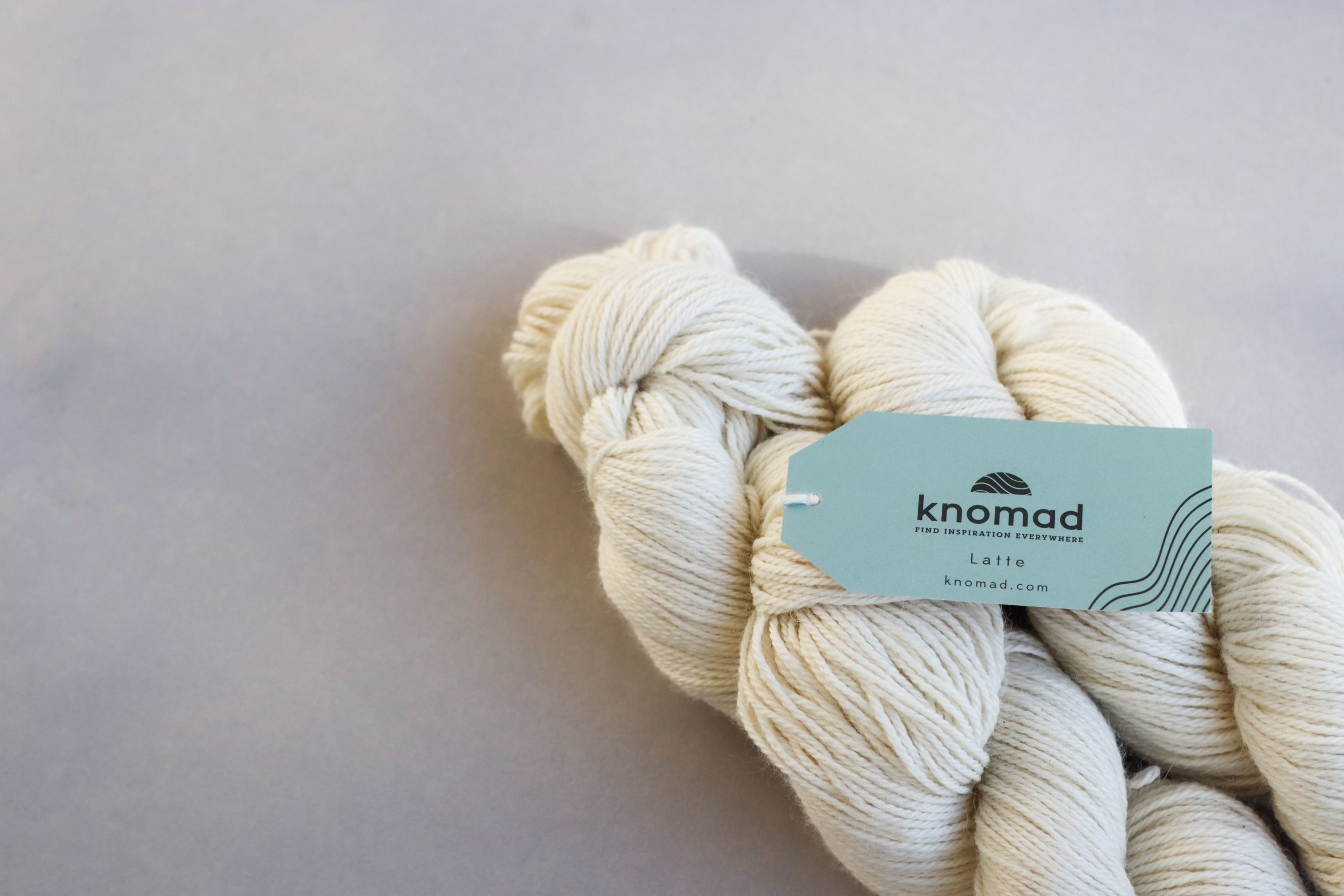
- 2 skeins of Knomad Latte
- Old clothes
- Gloves
 Step 1: Prep your fibre. Knomad pre-scours and washes their yarns before shipping them to us, so there should be no need to heavily clean the fibres--simply remove the tags, leaving all the ties, and open the hank into a big loop. Add reinforcement ties if you feel they’re necessary, and soak the fibre in warm water for an hour to get it fully saturated (typically 1 hour).
Step 2: Measure the alum. Wearing a respirator or face mask, measure out 12% of your weight of fibre (WOF) in alum sulfate. Here’s the math for our experiment:
200 x 0.12 = 24 g of aluminum sulfate
Hot tip: weigh out how much alum is in a tablespoon (dedicated tablespoon) and then calculate moving forward about how many tablespoons you’ll need to simplify future measuring.
Step 3: Add hot water to your alum in a small mixing container. I like to use empty, recycle-ready plastic containers. Stir the alum and water mixture until the alum is fully dissolved and the water looks cloudy or clear, but has no visible grains in the bottom of the container. Measure out 1 tbsp of Cream of Tartar and dissolve it into the water while it’s still warm.
Step 4: Transfer your mordanting solution to a larger stock pot, and fill with enough water to cover your skeins of yarn (don’t add them until the pot has all the water in it). Stir and then add your yarn, moving it around to let it fully absorb the mordanting solution. Set on low heat and simmer (do not boil) for 1 hour. Allow to cool overnight with the yarn in the solution.
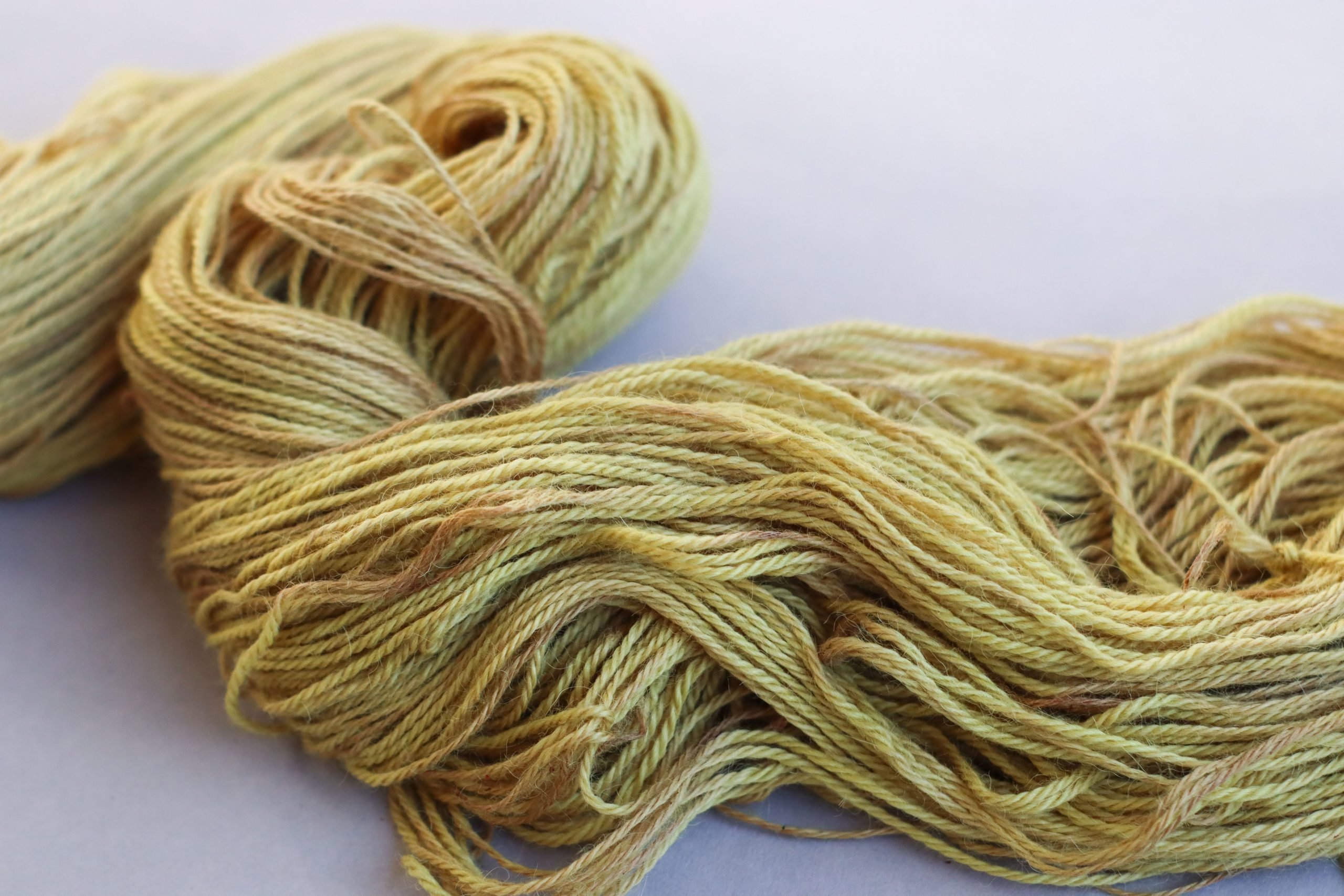
Step 5: Make your dye bath. Marigolds are so easy to use: simply add the dried flower heads to water in a stock pot, and push the flowers under with a spoon while you bring it to a simmer. Let it sit at this temperature for an hour, then turn it off and allow it to cool. Strain out the flower heads and save them for another dye bath later, they’re good for another steep!
Step 1: Prep your fibre. Knomad pre-scours and washes their yarns before shipping them to us, so there should be no need to heavily clean the fibres--simply remove the tags, leaving all the ties, and open the hank into a big loop. Add reinforcement ties if you feel they’re necessary, and soak the fibre in warm water for an hour to get it fully saturated (typically 1 hour).
Step 2: Measure the alum. Wearing a respirator or face mask, measure out 12% of your weight of fibre (WOF) in alum sulfate. Here’s the math for our experiment:
200 x 0.12 = 24 g of aluminum sulfate
Hot tip: weigh out how much alum is in a tablespoon (dedicated tablespoon) and then calculate moving forward about how many tablespoons you’ll need to simplify future measuring.
Step 3: Add hot water to your alum in a small mixing container. I like to use empty, recycle-ready plastic containers. Stir the alum and water mixture until the alum is fully dissolved and the water looks cloudy or clear, but has no visible grains in the bottom of the container. Measure out 1 tbsp of Cream of Tartar and dissolve it into the water while it’s still warm.
Step 4: Transfer your mordanting solution to a larger stock pot, and fill with enough water to cover your skeins of yarn (don’t add them until the pot has all the water in it). Stir and then add your yarn, moving it around to let it fully absorb the mordanting solution. Set on low heat and simmer (do not boil) for 1 hour. Allow to cool overnight with the yarn in the solution.
Step 5: Make your dye bath. Marigolds are so easy to use: simply add the dried flower heads to water in a stock pot, and push the flowers under with a spoon while you bring it to a simmer. Let it sit at this temperature for an hour, then turn it off and allow it to cool. Strain out the flower heads and save them for another dye bath later, they’re good for another steep!
 Step 6: Add your yarns gently to the dye bath, making sure that the yarn has enough room to move around but is mostly submerged in the pot. If you need more water, it’s okay to add some here. Bring the yarn and dye bath back up to a high heat without simmering or bubbling, let it sit at this temperature for 1 hour, then turn off the heat and allow it to cool. Remove one skein to shift with iron.
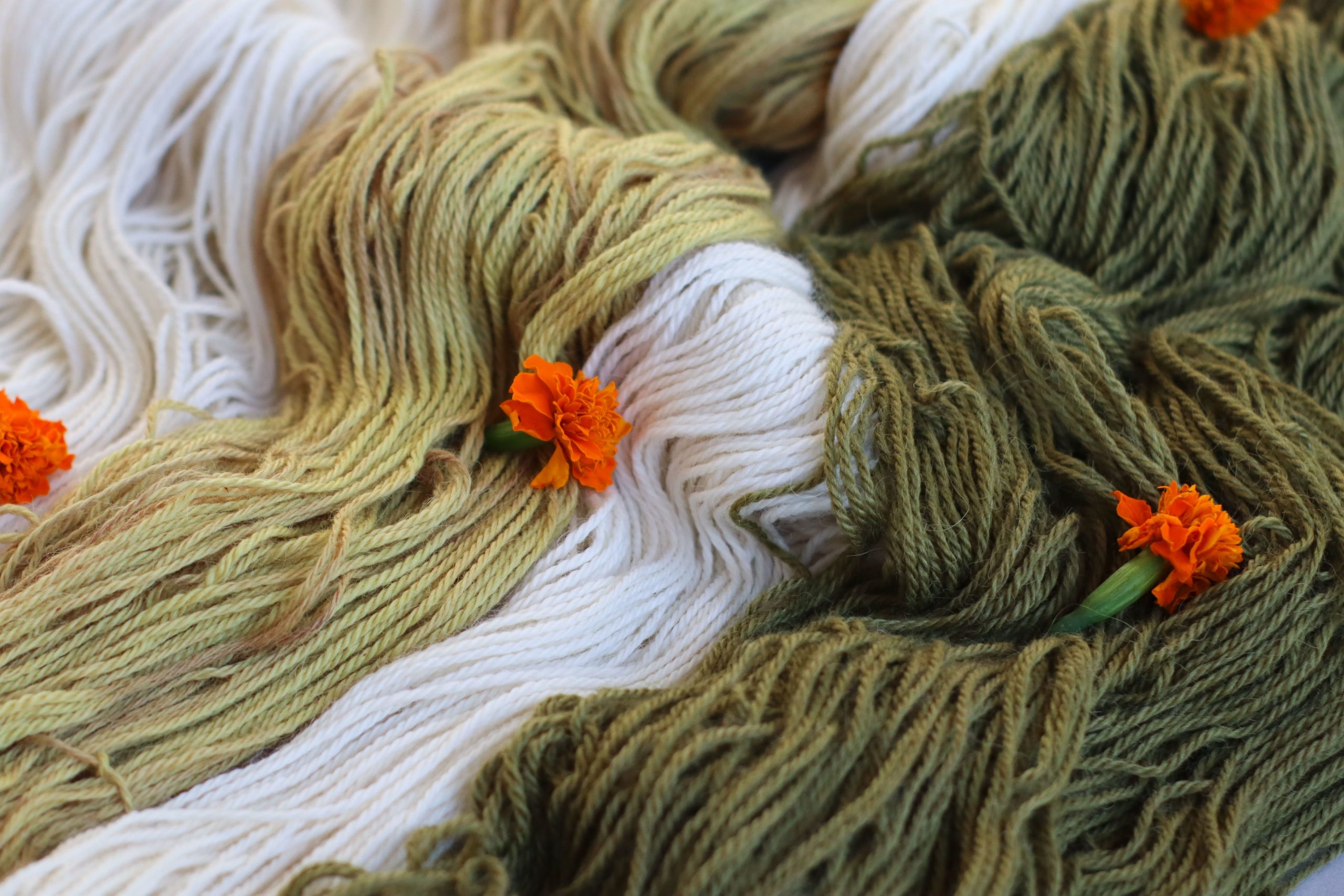
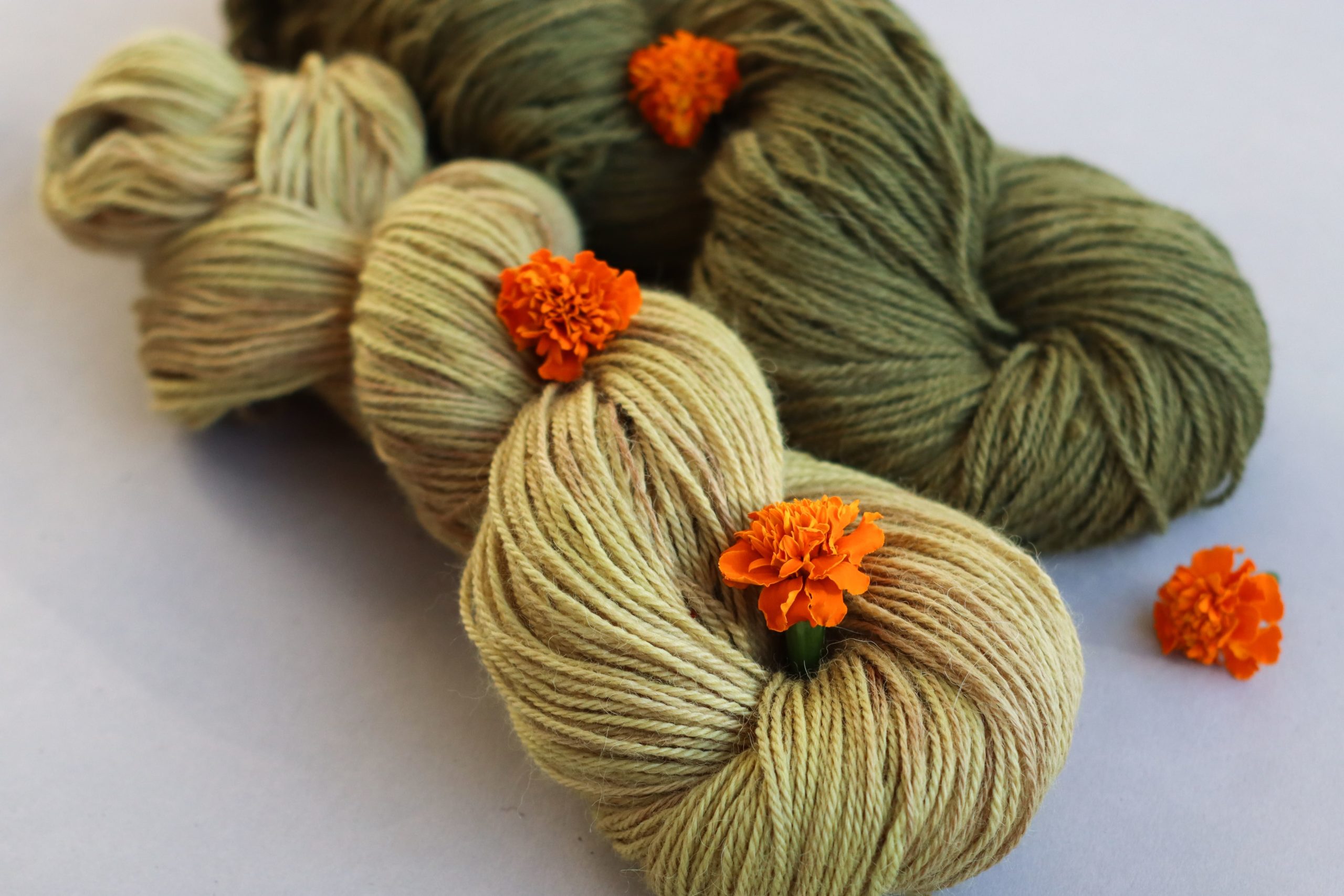
Step 8: Make an iron bath. To create an iron bath, you’ll need Iron Powder, or Ferrous Sulfate, mixed with water. Iron is a modifier that ‘saddens’ the color of your yarn, in this case changing a bright, greenish yellow to a deeper, more olive green.
Measure out 3% the weight of your fibre for a major shift as shown, or less for a more subtle shift (or create your own gradient by making each mini skein shift a bit more). I used 12 g for 100 g of fibre, and saved the iron bath in a recycled jar to use again later (make sure to mark what it is and keep it out of the reach of pets and kids).
Step 9: Rinse, especially your iron skein (the iron is okay to go down the drain in your home and will be filtered out of the water system, but septic tank users may want to double-check), then hang to dry out of the direct sun. I use a portable drying rack.
They will drip a little bit, so if you need to dry them indoors, I suggest putting them in a bathtub or in a room with a drain (like a basement). Depending on your humidity and weather, it can take 1-2 days for yarn to fully dry, but maneuvering it so that the same part of the hank is not always hanging down can help move this process along a bit.
Marigold is one of my favorite dyes to use and I love the range of greenish golds (my favorite color) that is achievable with the use of modifiers! Now… off to cast on that shawl.
Step 6: Add your yarns gently to the dye bath, making sure that the yarn has enough room to move around but is mostly submerged in the pot. If you need more water, it’s okay to add some here. Bring the yarn and dye bath back up to a high heat without simmering or bubbling, let it sit at this temperature for 1 hour, then turn off the heat and allow it to cool. Remove one skein to shift with iron.
Step 8: Make an iron bath. To create an iron bath, you’ll need Iron Powder, or Ferrous Sulfate, mixed with water. Iron is a modifier that ‘saddens’ the color of your yarn, in this case changing a bright, greenish yellow to a deeper, more olive green.
Measure out 3% the weight of your fibre for a major shift as shown, or less for a more subtle shift (or create your own gradient by making each mini skein shift a bit more). I used 12 g for 100 g of fibre, and saved the iron bath in a recycled jar to use again later (make sure to mark what it is and keep it out of the reach of pets and kids).
Step 9: Rinse, especially your iron skein (the iron is okay to go down the drain in your home and will be filtered out of the water system, but septic tank users may want to double-check), then hang to dry out of the direct sun. I use a portable drying rack.
They will drip a little bit, so if you need to dry them indoors, I suggest putting them in a bathtub or in a room with a drain (like a basement). Depending on your humidity and weather, it can take 1-2 days for yarn to fully dry, but maneuvering it so that the same part of the hank is not always hanging down can help move this process along a bit.
Marigold is one of my favorite dyes to use and I love the range of greenish golds (my favorite color) that is achievable with the use of modifiers! Now… off to cast on that shawl.